Amadeus
Brisbane Airport Biometric Enrolment
Redesigning Trust: The Brisbane Airport Biometric Bag Drop
The tech for biometric bag drop at Brisbane Airport was already built and working fine, but barely anyone was using it. As UX lead on Amadeus' Automated Bag Drop product, that one was on me to fix, so I got out of Figma and spent time in the actual terminal watching people avoid it.
The Challenge
I watched passengers and talked to a few of them, and three things kept coming up:
- No perceived value. Nobody could tell why scanning their face would make things faster.
- Cognitive overload. The enrolment screen was basically a wall of text.
- Privacy nerves. People were genuinely worried about where their face data was going.
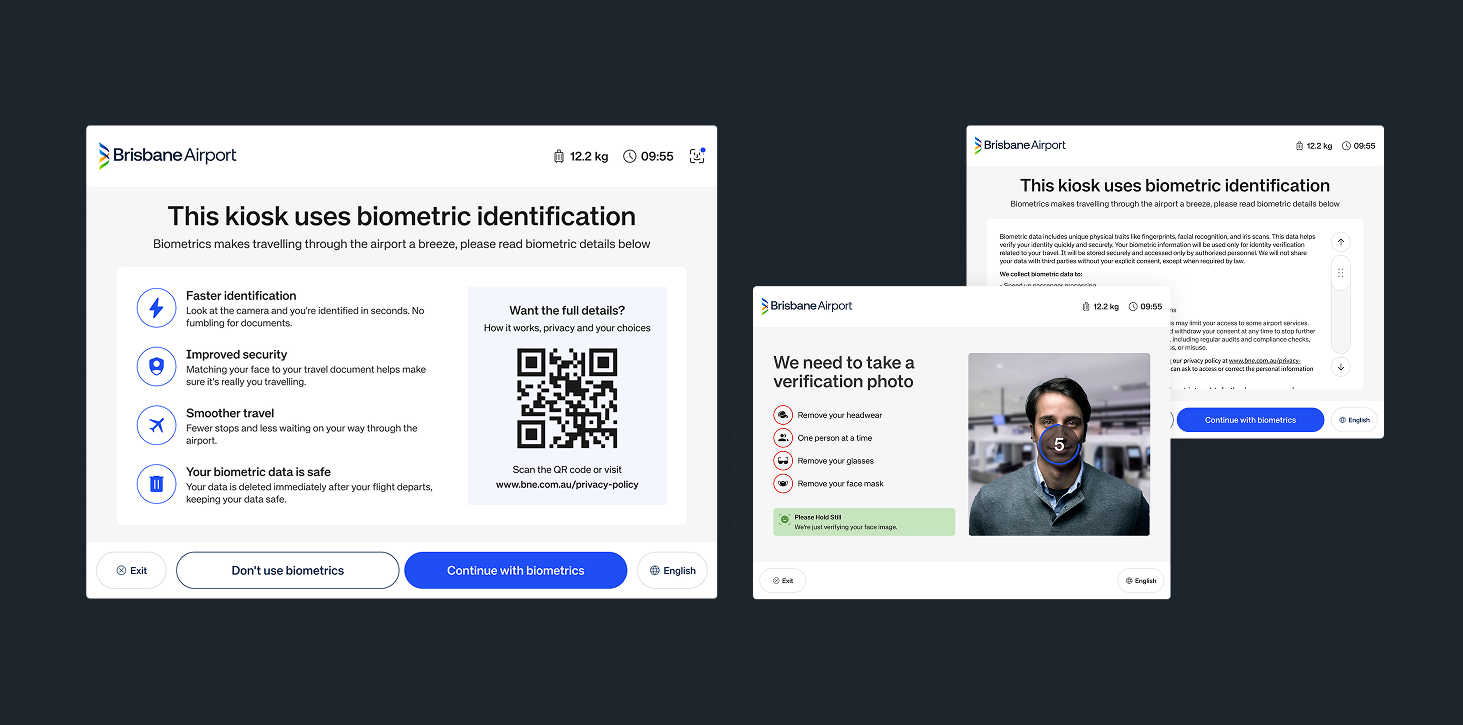
And on top of all that, Legal needed a full page of consent detail and acceptance graphics squeezed onto one screen. Not exactly room to breathe.
The Solution
Actionable, Inclusive UX
So I redesigned the flow to hit the legal requirements without burying the reason anyone would want to use it.
- Designing for trust: led with the benefit (speed and convenience), addressed the privacy worry head-on, and used a clearer hierarchy to fit every legal requirement on one screen without it reading like fine print.
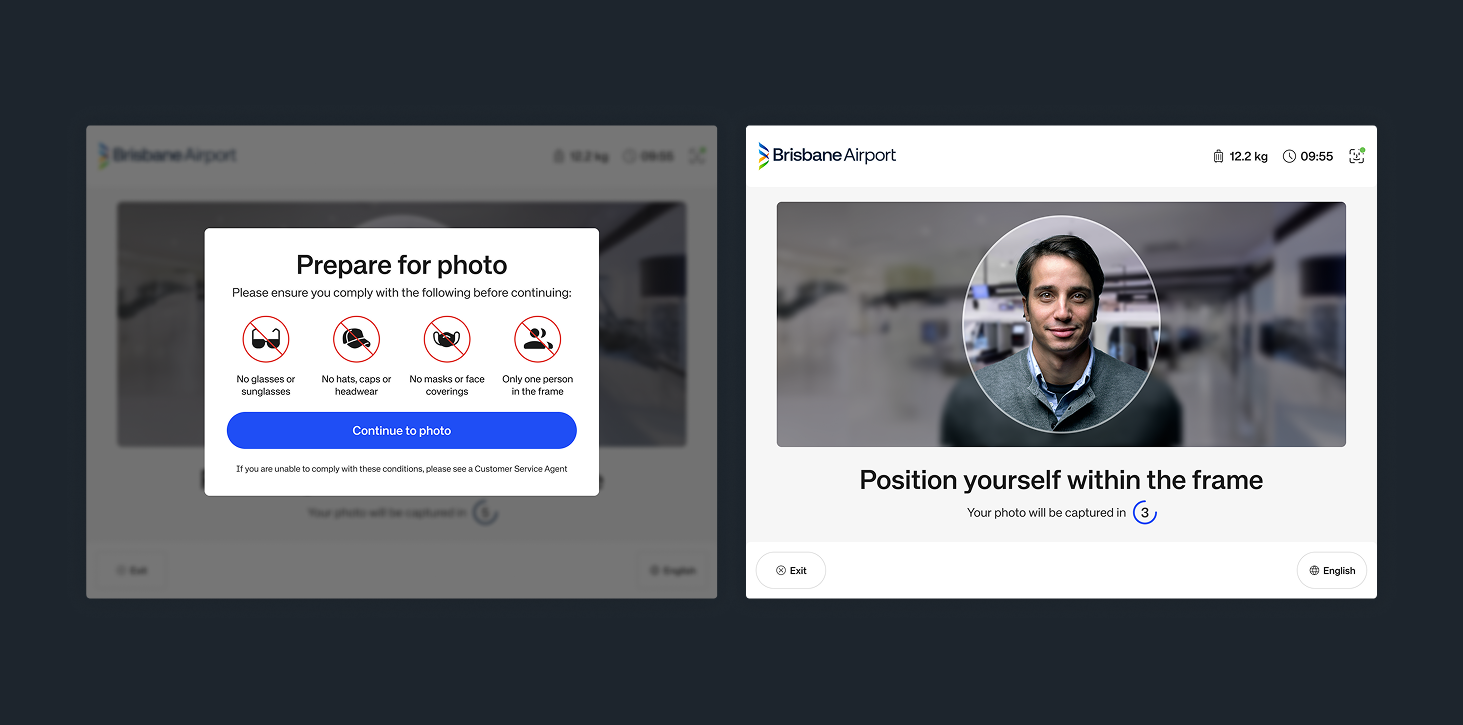
- Centered the capture viewport: passengers' faces were landing off to one side of frame, which was quietly causing a lot of the poor scans. Centering the viewport alignment alone made face captures noticeably clearer.
- Moved instructions out of the capture screen: the “how to take your photo” guidance used to live on the same screen as the camera itself, competing for attention at the exact moment people needed to focus. I moved it into a modal that shows before the camera opens, so people already know what to do by the time they're in frame. On its own, that decluttering improved facial recognition success rates and cut down how often the retry flow triggered, and the pattern was carried across every biometric touchpoint, not just bag drop.
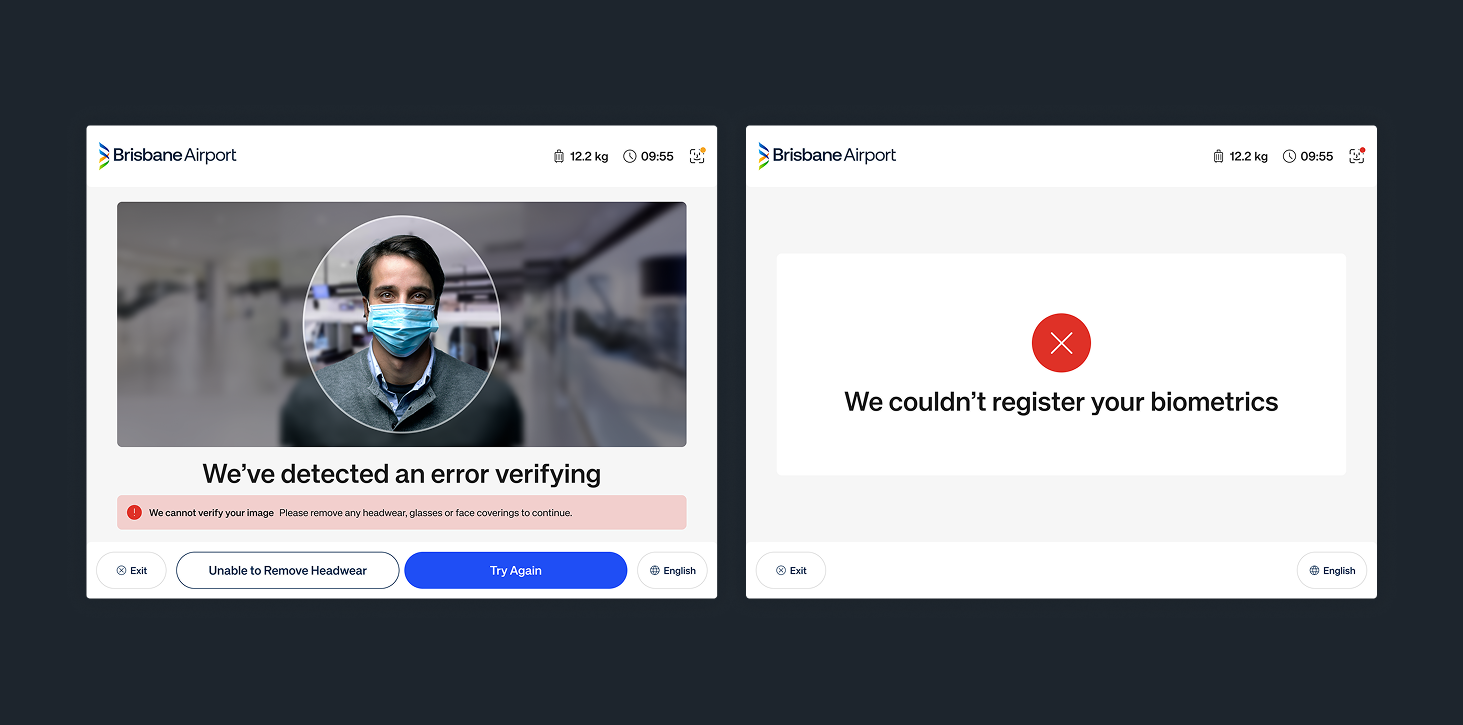
- Contextual clarity: added a simple prompt to remove headwear right at the point people needed it, not buried earlier in the flow.
- Inclusive bypasses: some passengers can't remove headwear for cultural, religious, or medical reasons, so I built a bypass to agent-led verification that felt like a normal option, not a consolation prize.
Results & Impact
- 77% Biometric enrolment
- An increase of ~40% on the previous period
- 74% First-time transaction success
- A huge win for first-time users of biometrics
- 51s Average success time
- About 20 seconds faster than previous versions of biometrics
It ended up winning an internal Amadeus Star Award, which was a nice bonus. What actually matters is the pattern: read the real anxiety, hit a hard legal constraint without watering down the experience, and ship something with numbers to prove it worked — and one that traveled well enough to become the standard across every biometric touchpoint, not just this one.